 CALL US NOW
 EMAIL US NOW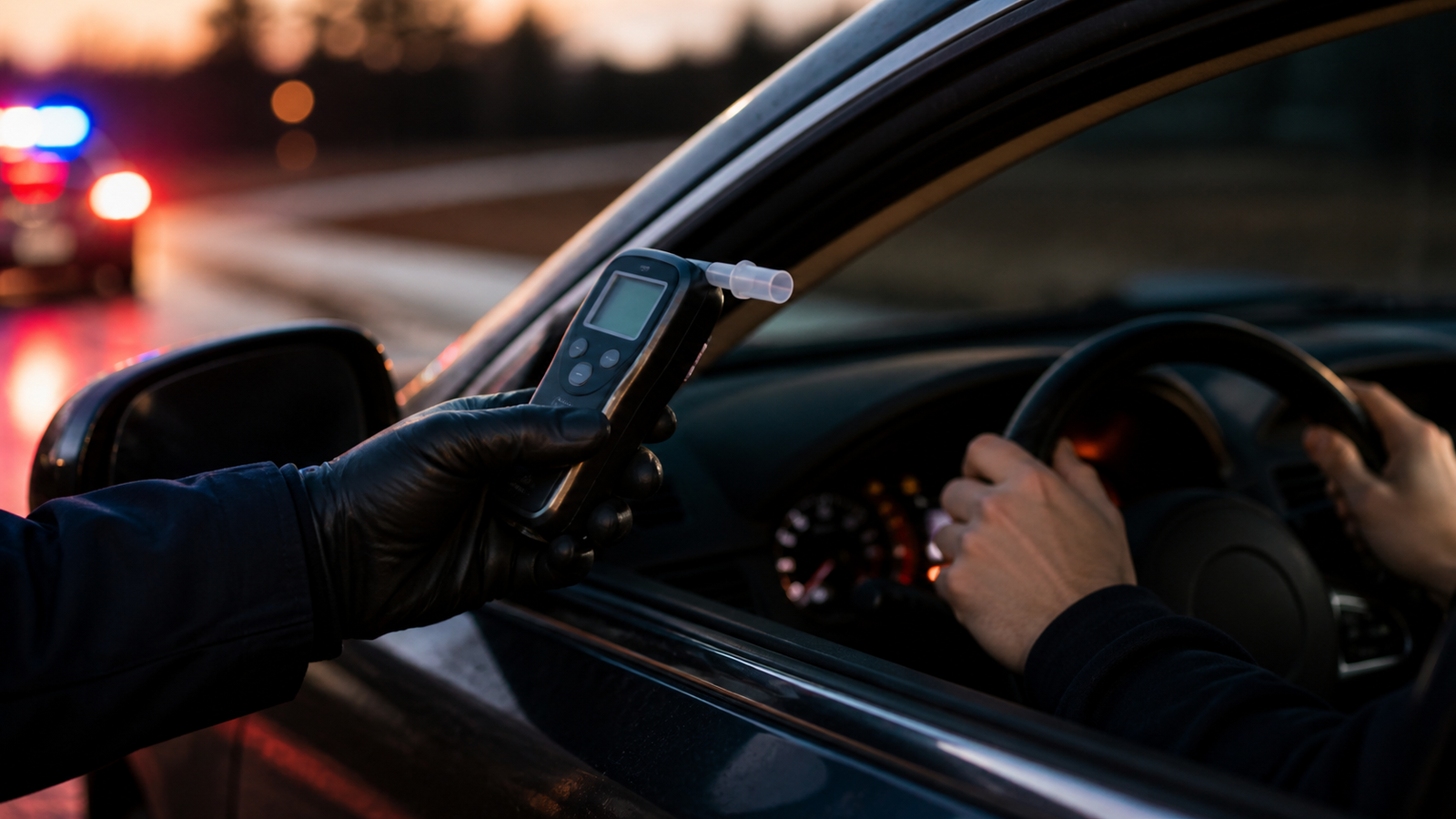
When a police officer asks you to take a breathalyzer test, submitting or refusing is a personal decision with a real tradeoff. That tradeoff means you’ll face a longer driver’s license suspension if you refuse compared with not having any record of a chemical result in the State’s hands. In Illinois, this decision is something you shouldn’t make without a full understanding of what happens with each answer.
What Refusing Actually Costs You
Every Illinois driver is subject to implied consent, which means that when you are driving on public roads, you automatically consent to chemical, blood, or urine testing if you are arrested with probable cause for DUI. Refusing to take a breathalyzer or another chemical test triggers a statutory summary suspension of your driver’s license.
While you will also face a suspension if you take and fail a chemical test, refusal to take one in the first place makes this term lengthier. Under 625 ILCS 5/6-208.1, a first offense DUI with a refusal results in a 12-month suspension while a failed test results in a 6-month suspension. It’s automatic and completely separate from the criminal case.
Refusing to take the breathalyzer test itself is not a separate crime in Illinois, and while it is your right to decline it, you should weigh the consequences of that decision. Often, people confuse this right to refuse a chemical test with the right to refuse field sobriety tests, which are different. Talking to a lawyer and learning what to do after a DUI arrest in Illinois is essential for having the best chance at a more favorable outcome.
What Submitting Costs You
Understanding what happens if you refuse is only part of the equation. You should know what happens at a DUI booking in Illinois, where you will be asked to submit the test. If you accept and your result is at or above the legal limit of 0.08%, you have now handed the State direct evidence to be used against you in criminal courts.
However, a BAC level that is at or above the limit does not always constitute a conviction. The machines used for measuring those levels must be properly calibrated, and the officer administering the test must be certified to administer it. An observation period also needs to be allowed. Any number of things could make a breathalyzer test read back with a higher BAC level, and with a lawyer on your side, you’ll be able to challenge certain points like these if you submit a test and fail.
What Refusing Does Not Do
One of the most common misconceptions that our founding attorney Erin K. Conner sees frequently is that many people believe that refusing the test means the officer doesn’t need any other evidence to make the arrest. To the contrary, refusing a breathalyzer test does not relieve the arresting officer of needing to have reasonable grounds to believe that you were driving under the influence.
Attorney Insight
“In a summary suspension proceeding, a failure to test does not alleviate the requirement that an officer have an adequate basis to suspect you of operating a motor vehicle under the influence, which is a frequent pathway to challenge the suspension.” — Erin K. Conner, former Chief of the Criminal Bureau, St. Clair County State’s Attorney’s Office
Already Refused? Here’s What Happens Next
If you’ve already been pulled over, refused to take a breathalyzer, and arrested, then there is no time to waste in protecting your rights. The 46-day clock is already running, and the petition to rescind must be filed. Take immediate action by contacting a Belleville DUI defense lawyer to help you navigate the process.
The Conner Law Firm defends drivers in Belleville , St. Clair, Madison, and Monroe Counties, and throughout southern Illinois, who refused chemical testing as well as those who submitted to it after a DUI arrest in Illinois. Call (618) 277-2421, text (314) 944-5553, or contact us today to find out the next steps.