 CALL US NOW
 EMAIL US NOW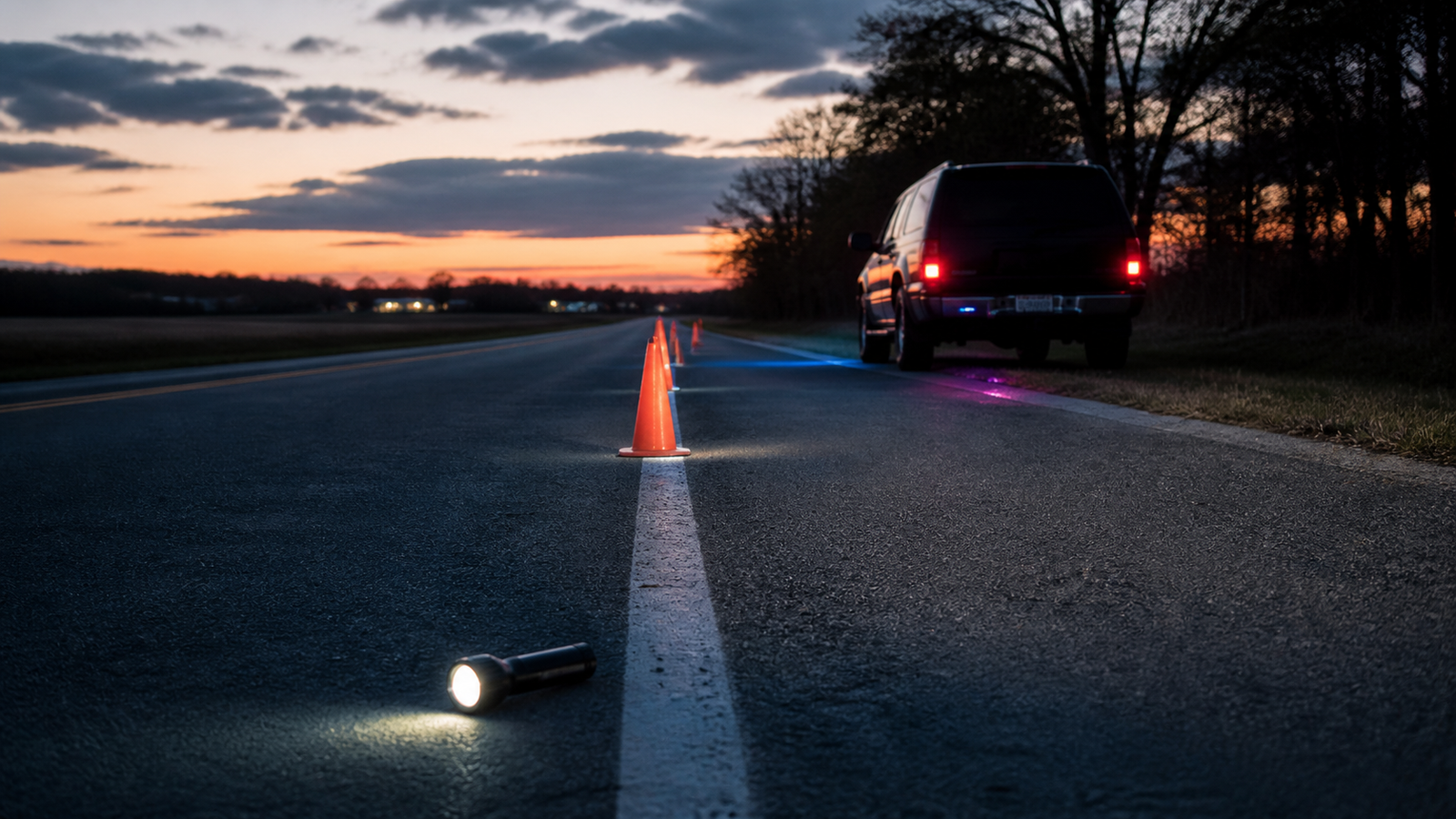
Getting pulled over is already a stressful experience from the time you notice the flashing blue lights behind you until the officer approaches your vehicle. When law enforcement have probable cause to make a traffic stop, they may have made some observations that led them to believe you were driving under the influence. As they check your license, insurance, and registration, they may ask you additional questions and eventually request that you step out of the vehicle to take field sobriety tests.
Knowing your rights and what you must submit to as well as what you can decline is imperative. Field sobriety tests are notoriously subjective, which is why The Conner Law Firm challenges field sobriety test evidence in DUI cases throughout St. Clair, Madison, and Monroe Counties, and throughout southern Illinois. This guide explains what you need to know when it comes to field sobriety tests in Illinois and why contacting a DUI defense attorney immediately is always the right move to make.
What Field Sobriety Tests Are, and Who Designed Them
Field sobriety tests are physical and cognitive evaluations conducted roadside by police officers to gauge whether a driver is impaired. These tests were developed by the National Highway Traffic Safety Administration (NHTSA) with the intention of creating a uniform system that law enforcement could use during traffic stops.
What are the three standard field sobriety tests? The Horizontal Gaze Nystagmus (HGN), walk-and-turn, and the one-leg stand are the only three field sobriety tests approved by the NHTSA. There are also non-standardized tests officers may use during Illinois traffic stops, which are unapproved. These include reciting the alphabet, counting backwards, touching your finger to your nose, or the Romberg balance test where you tilt your head back and close your eyes, though these extra tests don’t have formal scientific validation from the NHTSA.
Field sobriety tests are observational and psychophysical tools that rely entirely on an officer’s subjective visual grading. There are many things that can cause an entirely sober person to fail these tests such as medical issues, uneven road pavement, anxiety, or bad weather, which is why our firm regularly challenges them in court.
The Three Standardized Tests
Horizontal Gaze Nystagmus (HGN)
For the HGN test, the officer asks you to track a small object, such as a pen or light, with your eyes to check for involuntary jerking, medically known as nystagmus, which can become more pronounced with alcohol consumption.
Walk-and-Turn
The walk-and-turn requires you to take nine heel-to-toe steps along a straight line, turn, and take nine steps back while following instructions and keeping your balance.
One-Leg Stand
You must raise one foot off the ground, look at your foot, and count aloud for roughly 30 seconds.
Each one of these tests has a defined set of indicators that officers are trained to score. However, since that leaves much room for interpretation, a field sobriety test may not always be the best indicator of a driver’s impairment.
How Officers Are Supposed to Administer Them
With these three tests, the NHTSA has specific protocols that dictate instruction, demonstration, lighting, surface, and scoring. Deviating from these requirements can undermine the reliability of the test itself. Since officer training and certification are discoverable pieces of evidence, the administration of a field sobriety test in your case may not hold water where training was insufficient or certifications have lapsed.
Why Results Are So Often Challengeable
Are field sobriety tests accurate in Illinois DUI cases? While they can display a driver’s behavior during the traffic stop, they are easy to challenge in court for several key reasons.
Roadside Conditions
One of the first is that the roadside conditions present wherever you are stopped may make you stumble or lose your footing, even if you’re entirely sober. Uneven surfaces, slippery gravel on the shoulder, bright headlights from oncoming traffic and the flashing lights from the police cruiser making it difficult to see. Weather, high speed traffic, or even complete darkness on more quiet roads are just some of the unpredictable elements that can cause you to have difficulty completing these tests.
Physical and Medical Factors
Additionally, field sobriety tests don’t take into account the physical and medical factors a person may have. Age, weight, inner-ear conditions that throw you off balance, neurological conditions, or an injury all have their impacts on the ability to successfully complete these subjective tests. Even footwear may get in the way of proper walking or standing on one leg.
Nervousness
Many people who wind up getting arrested for a DUI are first-time offenders who have never been in trouble with the law. When a law-abiding citizen is pulled over, it is a nerve-wracking situation, one that can make that person perform poorly during these tests due to the stress.
Challenging the officer’s observations in court is one of the ways The Conner Law Firm comes to your defense. Attorney Erin Conner knows first-hand how the prosecution will play, and she proactively prepares to challenge field sobriety tests for her clients.
You Can Decline
Can you refuse field sobriety tests in Illinois? Yes, you can. In Illinois, you have the legal right to decline participation in roadside field sobriety tests without triggering an automatic driver’s license suspension. Understanding what to say during a DUI stop is part of it, and being polite is always in your best interest as dashcam and bodycam footage will show your demeanor throughout the interaction.
Whether you have a physical disability that would prevent you from participating or you simply don’t want to, it is your right to refuse any field sobriety test.
How They’re Different from Chemical Tests
Field sobriety tests are voluntary because they happen before an arrest is ever made, and no statute imposes an affirmative duty to perform them. They are not a mandatory requirement of the State. However, as a condition of driving in Illinois, implied consent under 625 ILCS 5/11-501.1 means that you automatically agree to taking chemical tests such as breathalyzer, blood, or urine tests after a lawful DUI arrest.
You can still refuse to take a chemical test, though it does come with consequences. When you refuse chemical testing, an automatic license suspension will issue through the Secretary of State. Providing a sample for chemical testing hands the State direct evidence, though it can be challenged by your attorney. Refusing to take the field sobriety tests doesn’t have the same result.
With or without field sobriety tests, an officer can still place you under arrest if they observe any other signs of impairment. Officers will detail in their report whether they smelled alcohol, if your speech was slurred, or if they observed you driving erratically. Refusal to submit to field sobriety tests will also be brought up by prosecutors as circumstantial evidence. This is why strong DUI defense is critical immediately after your arrest so your attorney can start dismantling the State’s case while making sure to handle your statutory summary suspension on the administrative side.
Attorney Insight
“The Horizontal Gaze Nystagmus, Walk-and-Turn, and One-Leg Stand were developed by the National Highway Traffic Safety Administration. The results of these tests are subject to legal challenge based on how they were administered and the officer’s training and compliance with NHTSA protocols.” — Erin K. Conner, Founding Attorney and former Chief of the Criminal Bureau, St. Clair County State’s Attorney’s Office
Talk to a Belleville DUI Lawyer
When you’re pulled over by the police for suspicion of DUI, you are only required to provide your driver’s license, insurance, and registration. You are not required to answer any additional questions about where you’ve been or if you’ve been drinking, and you do not have to take a field sobriety test. Whether to refuse chemical testing as a personal decision that balances two negative outcomes if you have consumed alcohol, but providing a sample provides evidence against you in a potential criminal case. When you’re in this situation, you need a Belleville DUI defense lawyer.
The Conner Law Firm challenges field sobriety test evidence on various grounds in DUI cases in St. Clair, Madison, and Monroe Counties, and throughout southern Illinois. While there is no guarantee of any case outcome, our extensive experience in the practice, including working DUI cases from the side of the prosecution gives our clients the best chance at the most favorable results. Call (618) 277-2421 or text (314) 944-5553 today to schedule your free consultation and learn more about how our firm can come to your defense.